Simplii Learn
Helping newcomers navigate Canada’s financial system with confidence
My Project Role
Client Research and Opportunity Identification
Conducted comprehensive research on clients, collaborating with the team to identify a potential business opportunity for Simplii Financial.
UI Design
Designed the page interface, including layouts, typography, imagery, spacing, and visual hierarchy, to create a cohesive experience aligned with the company’s branding.
Figma Prototype and User Testing
Built a functional high-fidelity Figma prototype for user testing. Conducted usability testing to observe how users navigated the website, gathered feedback on clarity and ease of use, and refined the layout, content, and flow to improve the overall user experience.
Selected Company
Simplii Financial

Simplii Financial, a Canadian online banking service under the ownership of the Canadian Imperial Bank of Commerce (CIBC).
Why
Simplii Financial allows newcomers to register for a banking account before they arrive in Canada. We want our intervention to provide accessible information for newcomers before they come to Canada, thus newcomers are able to fully prepare for the new financial landscape before they arrive.
Problem Space
Newly landed immigrants encounter difficulties when navigating the Canadian banking system.
“In 2022, Scotiabank conducted in-depth research to better understand the experiences and challenges facing newcomers when they move to Canada. Research revealed that newcomers often feel overwhelmed, worried, and confused when learning to navigate the Canadian banking system...”
Scotiabank (2022)
Newly landed immigrants who had been in Canada for less than 2 years have lower credit visibility.
“Study found that newly landed immigrants who had been in Canada for less than two years were less visible (14.8%) than Canadian-born families (7.5%).”
Government of Canada (2023)
Design Statement
“
How might Simplii Financial create a compelling experience for the working group of immigrants to help them to build financial confidence and security in Canada?
”
Target Audience
Working Immigrants
According to the Government of Canada, the majority of immigrants are within the age 20-34, classified as the core working age group.
“Just over 1 in 10 recent immigrants were youth and young adults aged 15 to 24 (10.9%), while most (64.2%) were in the core working age group of 25 to 54.”
Government of Canada (2023)
Design Solutions
Simplii Learn
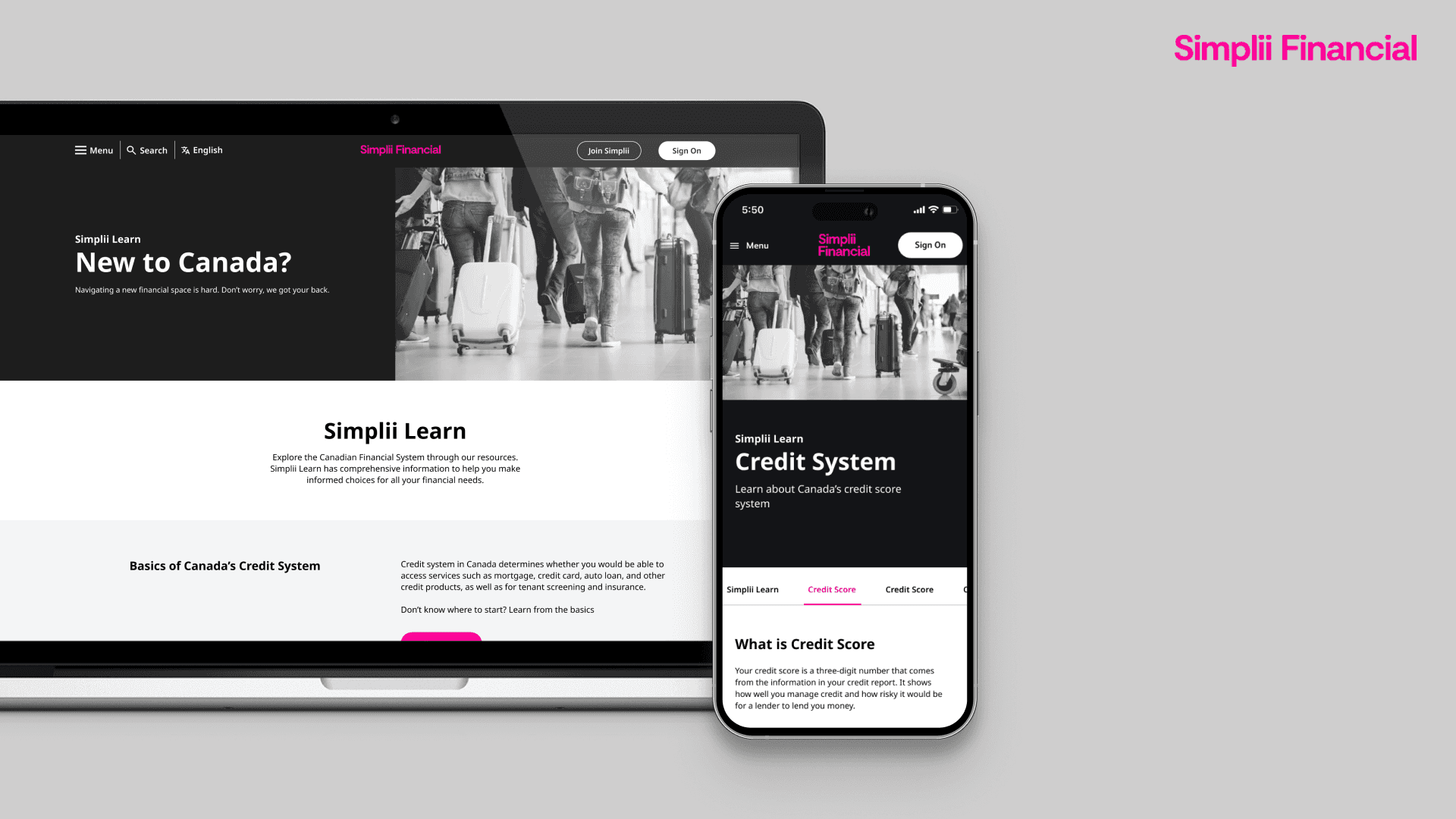
Simplii Learn is a purposeful educational system tailored for newly arrived immigrants, facilitating their integration into the Canadian financial landscape. This initiative goes beyond traditional models, addressing specific financial considerations for immigrants, aiming to bridge knowledge gaps and foster financial literacy. Through engaging modules and practical insights, Simplii Learn empowers newcomers to make informed financial decisions, promoting independence and stability in their new home.
Section Overview
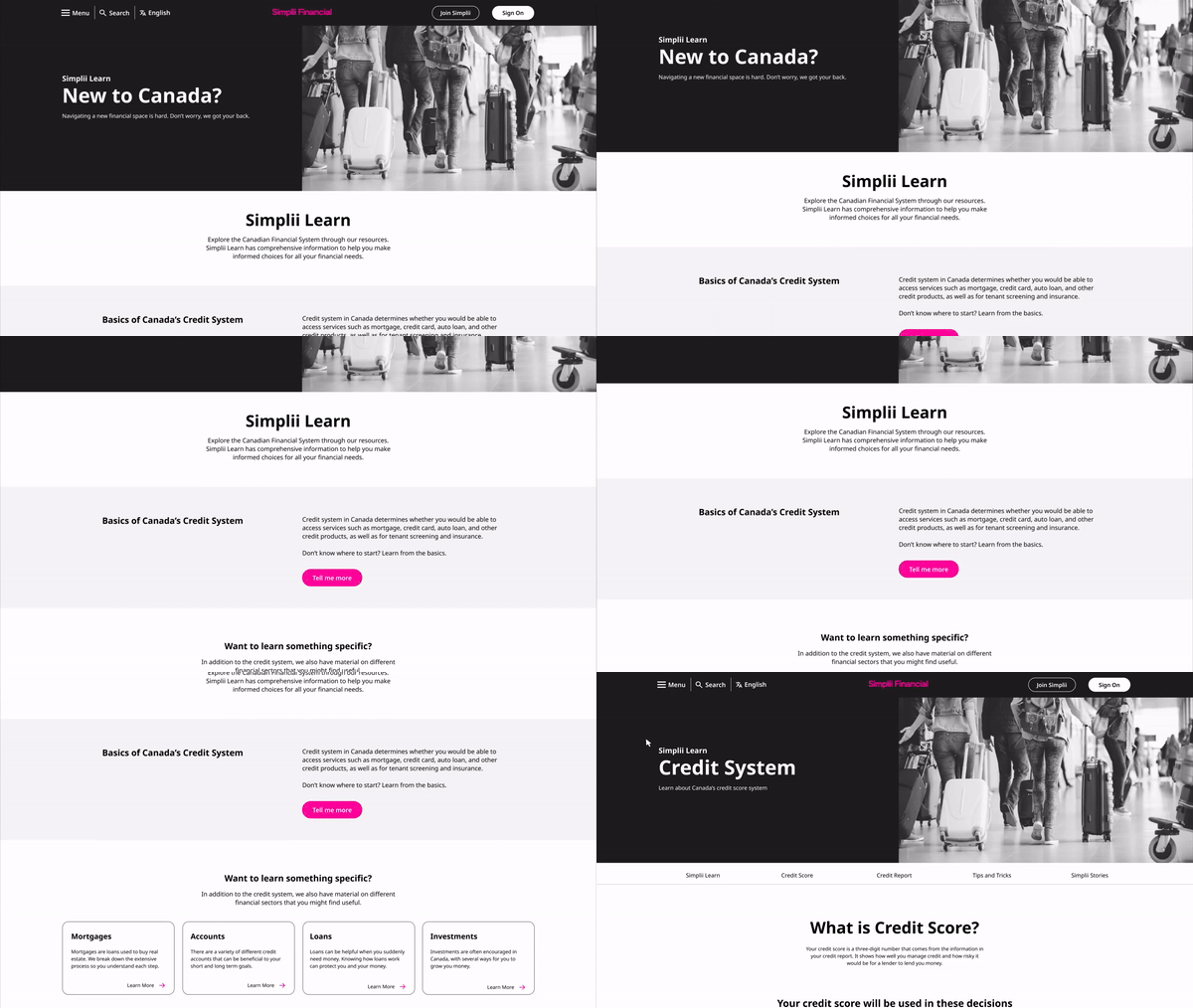
Introducing Simplii Learn’s Financial Learning Modules
Introduction to Simplii Learn and different learning modules.
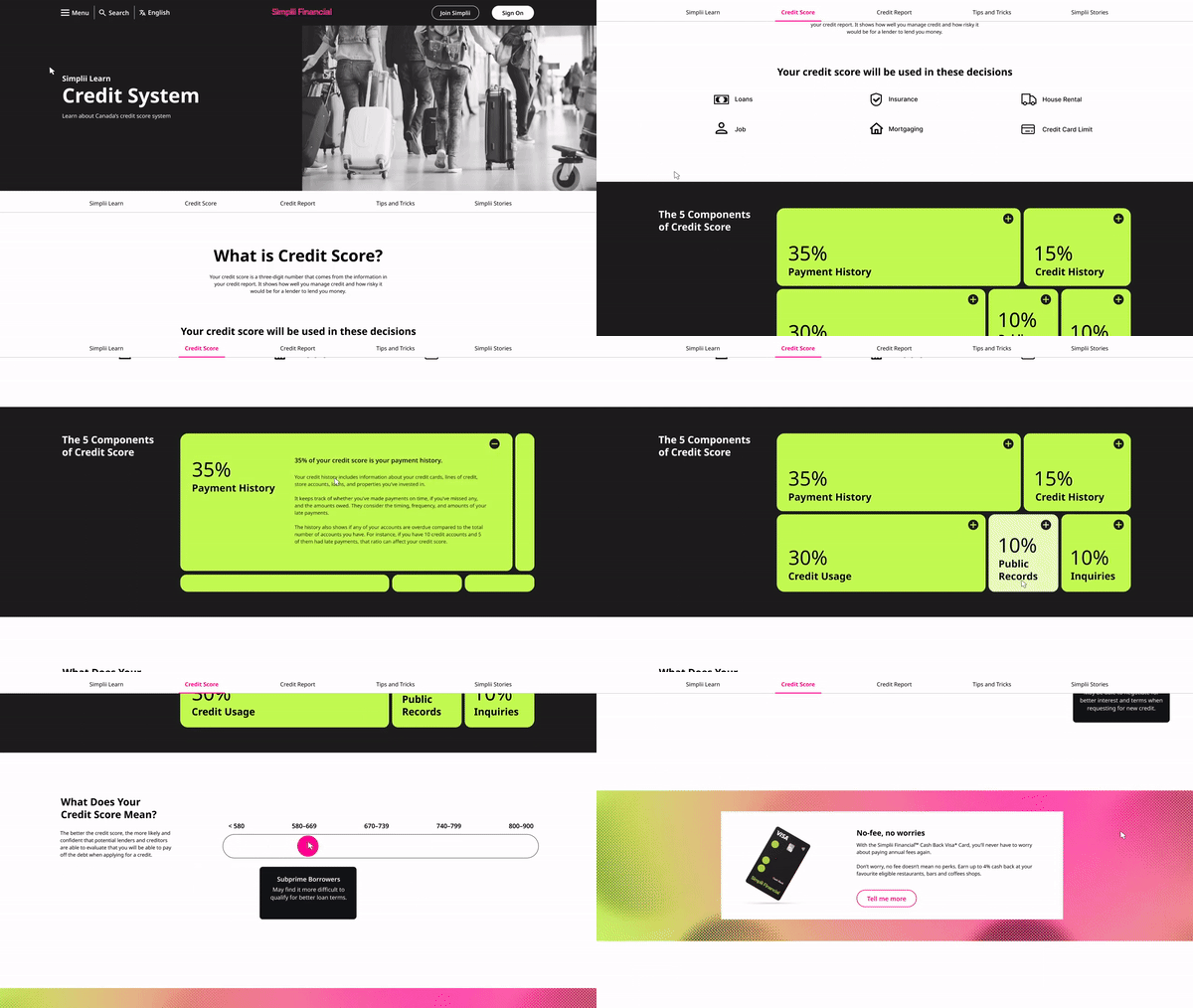
Explaining How Credit Scores Work in Canada
First section of Canadian's credit system learning module. Defines and explain what credit score is and the impact it can bring.
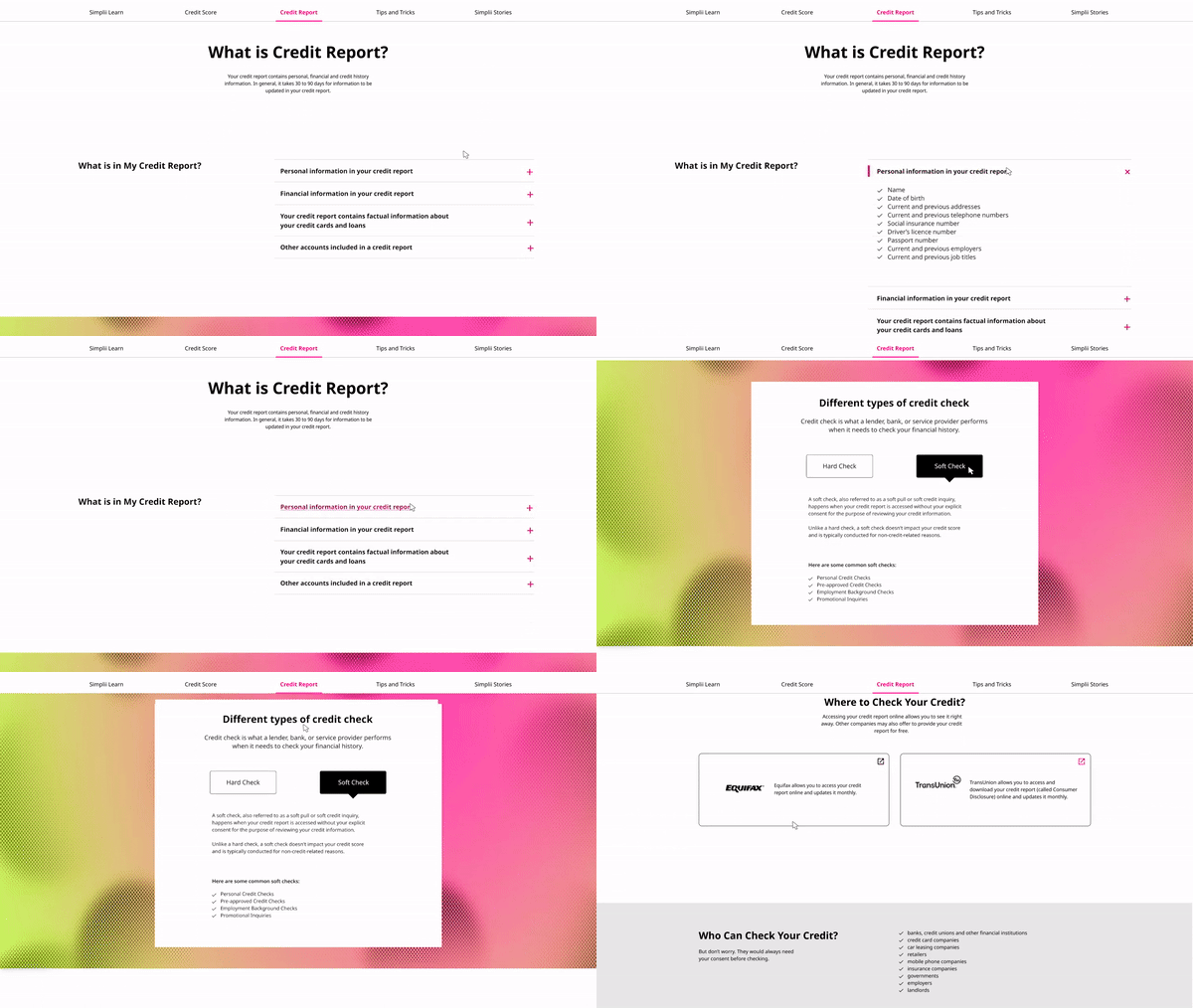
Breaking Down What’s Inside a Credit Report
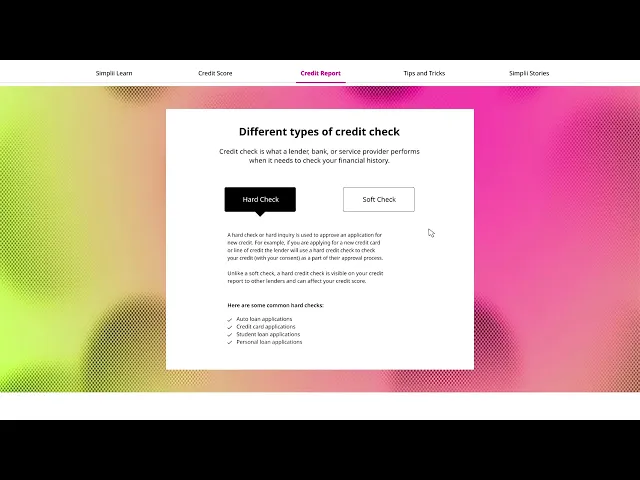
Introduces what is included in a credit report, different credit checks, how and where to check credit report.

Providing Practical Tips for Building Credit
The page offer a compilation of credit-building tips, including strategies for establishing a credit score from scratch, improving existing credit scores, and dispelling common misconceptions held by individuals.
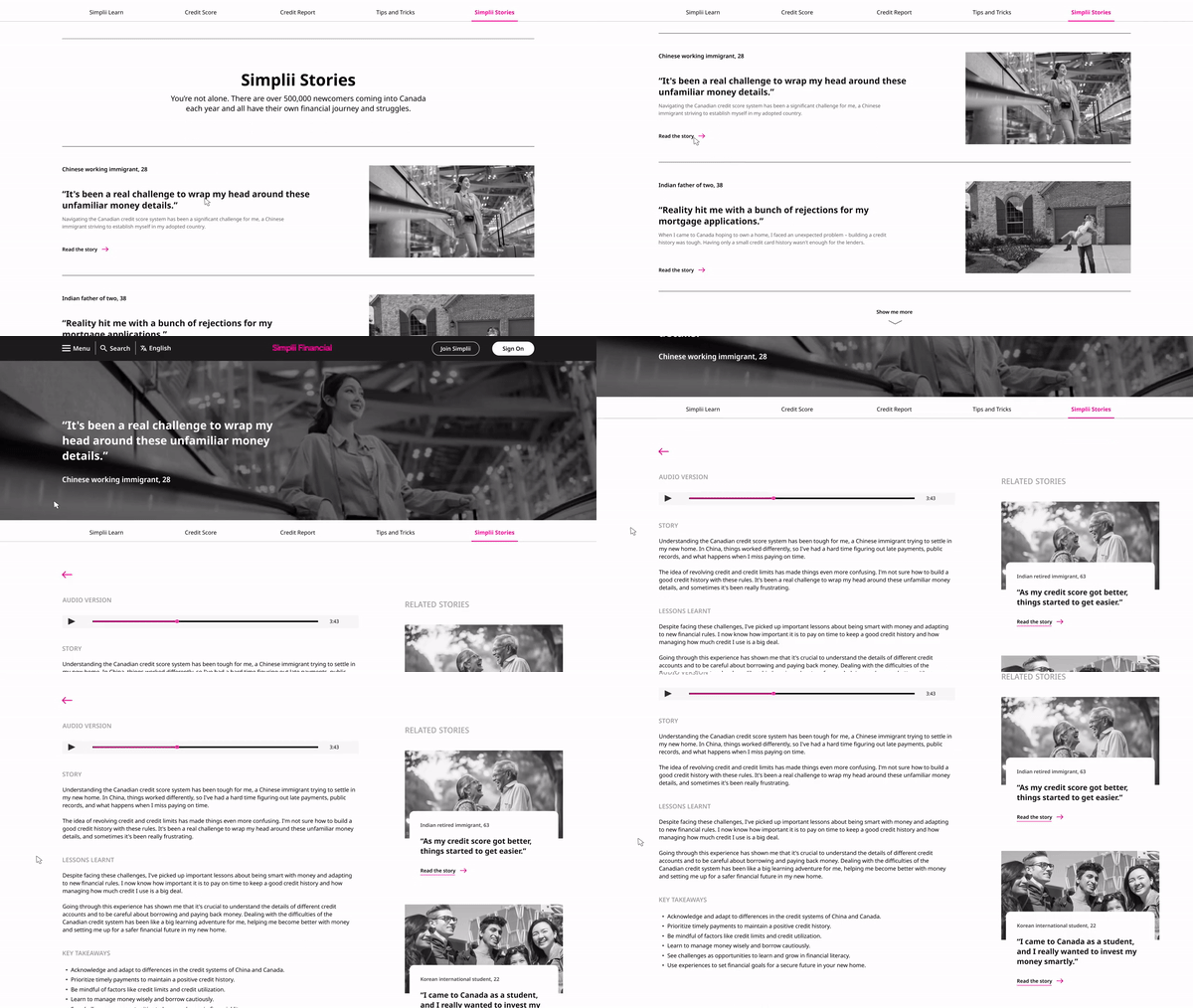
Learning Through Newcomer Financial Experiences
The goal of the Simplii Stories section is to offer newcomer stories of other newcomers for better relatability and empathy. This approach allows them to draw insights not only from successful stories but also from others that may provide valuable lessons.

Making Financial Education More Accessible Across Different Languages
Language translation allows those who do not speak or read English well to learn about Canada’s financial system in whichever language they prefer. The team opted to implement the languages of the top 7 non-English-speaking countries that immigrate to Canada.
Design Process Overview
Research Insights
In the research phase, my group and I conducted research to identify a problem space and business opportunity for our selected client. We discovered that many newcomers face challenges when navigating Canada’s financial system, especially when trying to understand unfamiliar services such as banking, credit cards, taxes, mortgages, and student loans.
These insights helped us define a problem space around financial preparation before arriving in Canada. From there, we identified an opportunity for Simplii Financial to provide clear, newcomer-focused banking information that helps users feel more prepared and confident.
Newcomers Face Unfamiliar Financial Services in Canada
As newcomers to Canada, many of the financial services provided are different from what they are used to back home. Things such as taxes, credit cards, mortgages and student loans may be completely different or new concepts to them.
CBC, 2023
Canada welcomes approximately 500,000 new immigrants annually, many of whom face challenges understanding unfamiliar financial services such as taxes, credit cards, mortgages, and student loans.
Scotiabank, 2022
Intervention Point
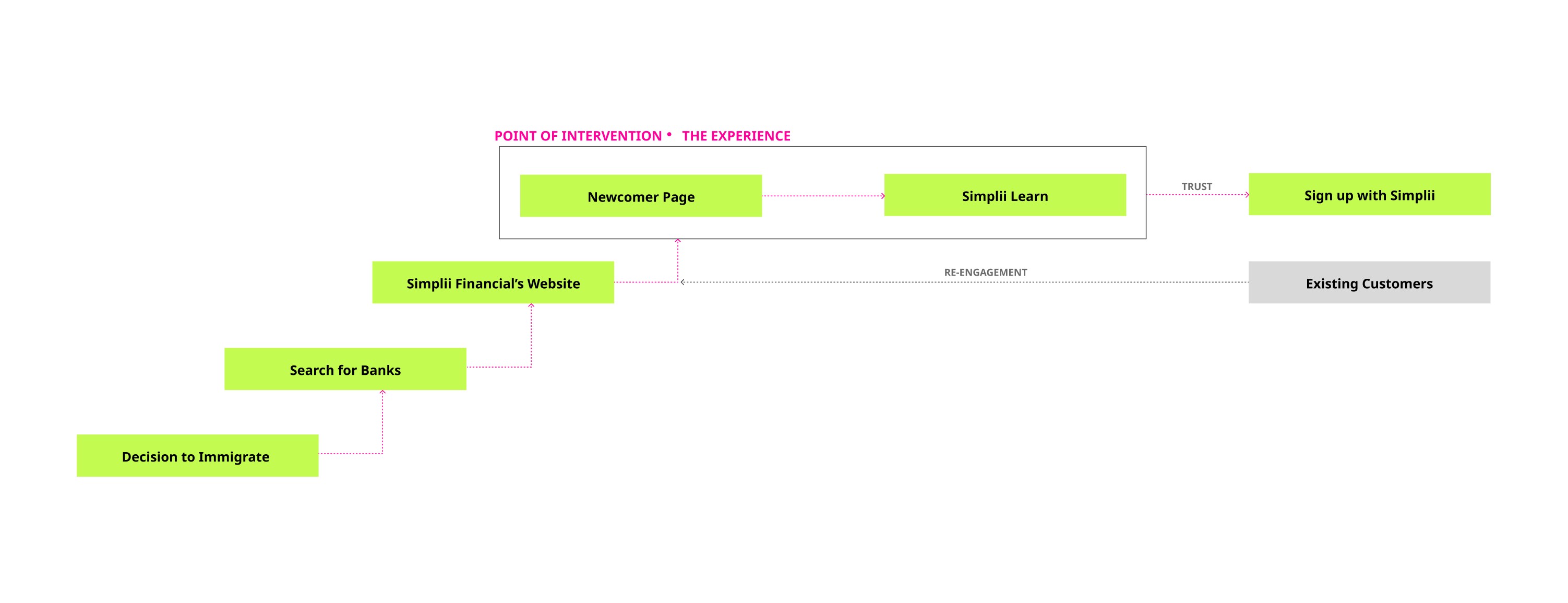
Our intervention occurs prior to customers signing up with Simplii Financial. We believe that establishing trust at this initial stage is crucial, as it enhances the perceived value of our services. By building trust with a larger audience, we aim to encourage greater utilization of Simplii's products, thereby contributing to the overall success of the business.
Solution Ideation
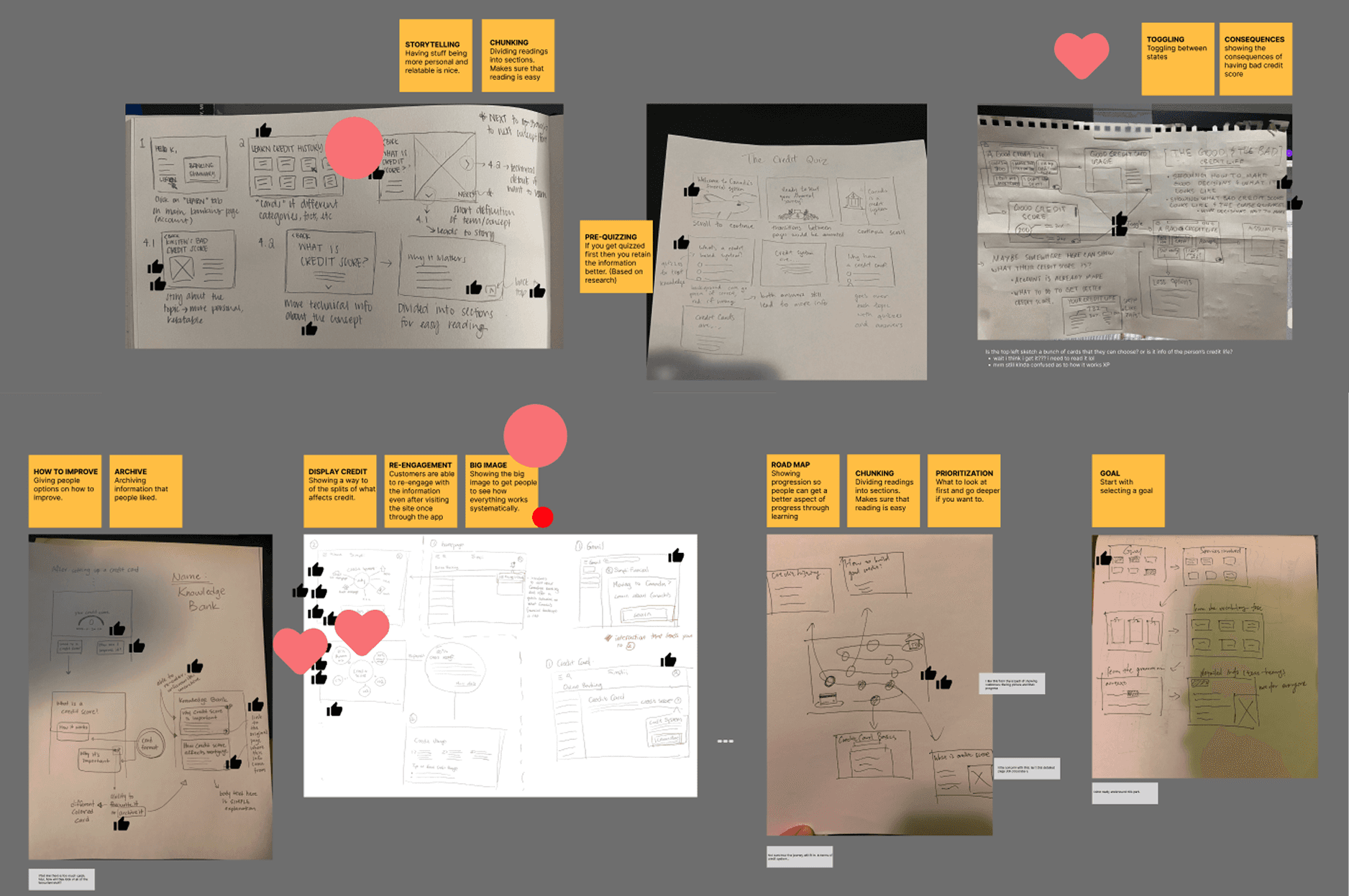
For solution ideation, we began by researching precedents of similar products currently available, then sketched out our ideas. From there, we moved into a decision-making process to determine which ideas, or parts of ideas, would work best for our intervention. Once the product and flow were finalized, we began creating the initial design direction for Simplii Learn.
Initial Design Direction
User Testing and Refinement
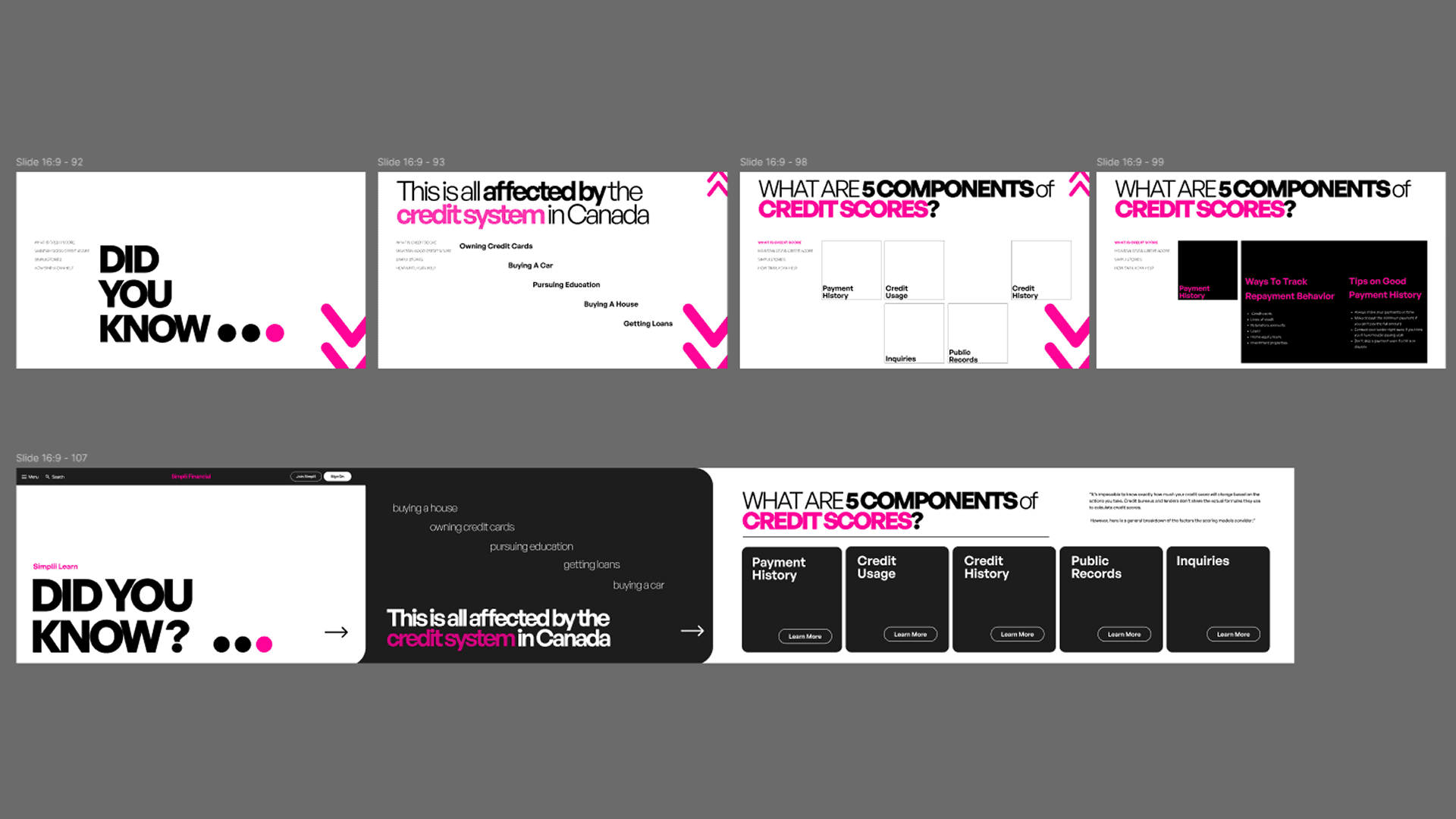
With our initial design direction established, we conducted user interviews with selected participants from our target audience to gather feedback on the content, structure, and learning flow. These insights helped us identify areas of confusion, understand users’ needs, and refine Simplii Learn into a clearer and more accessible financial learning experience.
Key Insights
The visual direction differs from Simplii’s existing design language, which may reduce brand consistency, credibility, and user trust.
The interaction design feels engaging and playful, but some interactions may be difficult to understand for users who are less familiar with web-based experiences.
The information feels too surface-level and may not provide enough unique value compared to financial resources that users can easily find elsewhere.
Final Design Direction
Design System
Prototyping
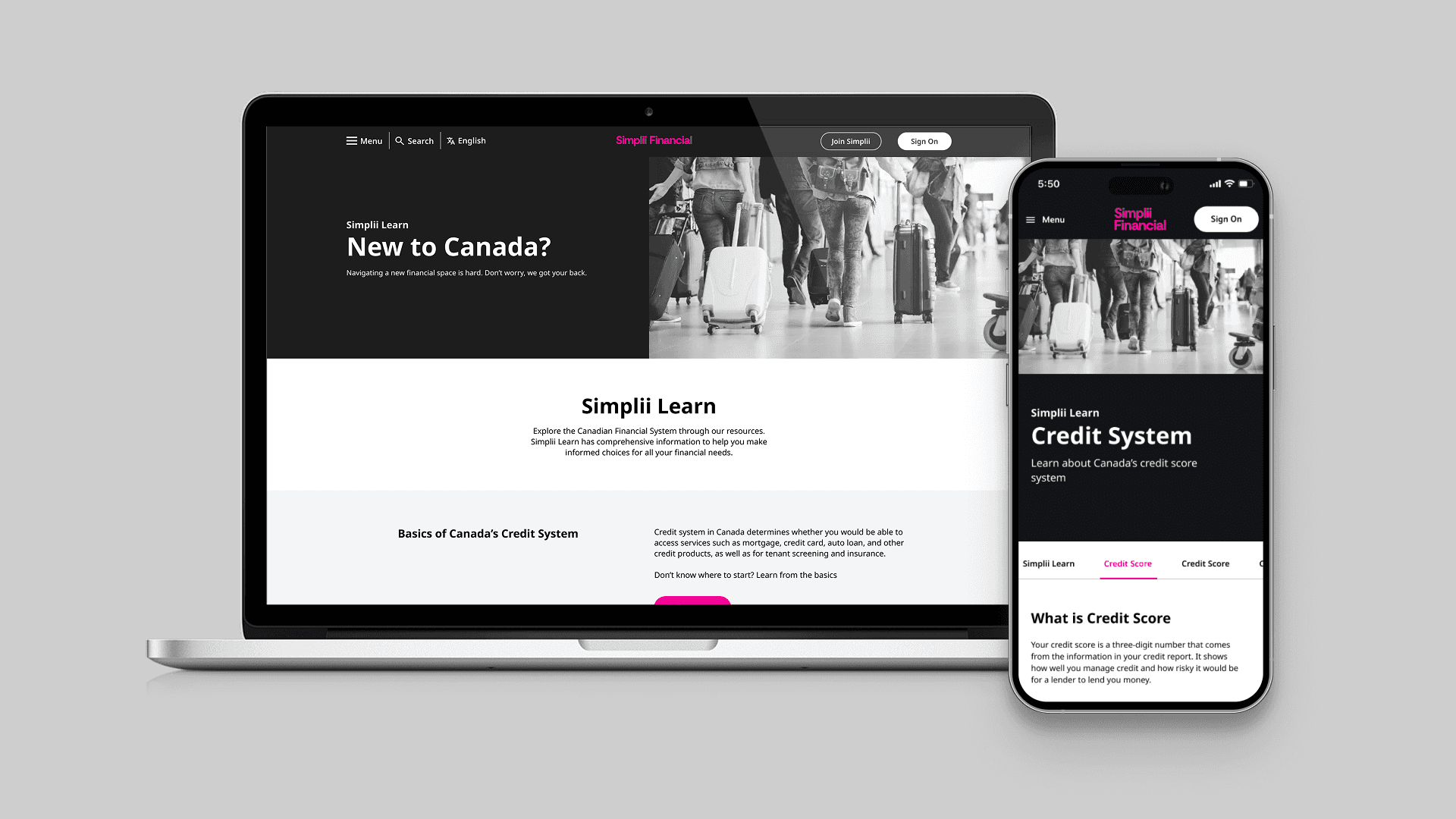
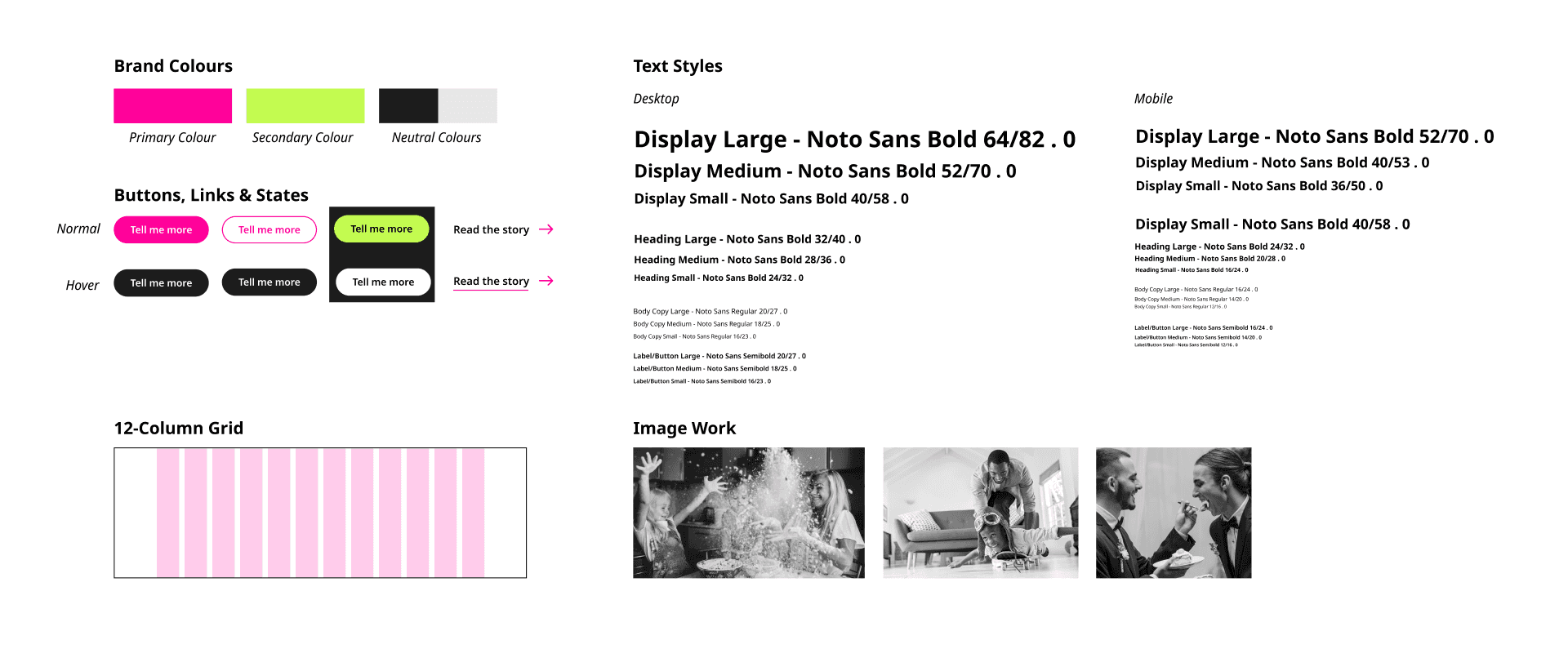
Developing high-fidelity prototypes to simulate an interactive financial learning experience for newcomers to Canada. Key sections such as learning about credit scores, understanding credit reports, exploring financial tips, reading newcomer stories, and using language translation were designed to make complex banking information clearer, more accessible, and easier to navigate.
Reflection
Avoid Designing in Our Heads
Throughout the project, we encountered various scenarios where there were multiple approaches in solutionizing. In tackling this challenge, we worked together to agree on the best decisions to move the project forward. We prioritized avoiding "designing in our heads." Our approach involved substantiating ideas with precedents through thorough research, interpreting user testing results, and conducting design sprints within the group. This methodology ensured that our decisions were well-informed and aligned with the project's objectives.
Pivots Quickly from Bad Ideas
In our brainstorming sessions, we sometimes spent too much time discussing weaker ideas, which slowed our exploration of stronger ones. To address this, we began gathering as a team before each ideation session to clarify our goals and prevent off-topic ideas. We also implemented a time limit for pitching ideas to avoid extended debates. Decisions were then made through majority voting, allowing us to focus our efforts on developing stronger concepts.